Can we Change the World? Meet the Man who Didn't Fly.

Updated: Aug 15
Italian scientist Dr. Gianluca Grimalda—'the man who refused to fly'—made headlines by opting out of air travel where possible for a 40,000-kilometer work trip related to climate research. His principled refusal, which cost him his job and led to a crucial lawsuit win, has inspired many and raises questions such as: can we change the world, and is work more important than the planet?

The documentary about the remarkable, (virtually) flight-free expedition undertaken for scientific research by Italian climate and social scientist Dr. Gianluca Grimalda opens with poignant remarks about his planned journey: "I heard about your decision to avoid flying. You must be kidding, right? Do you really think the world will change? No, it's just the same as always."
The thrust of these words echoed certain media reactions regarding the potential futility of the journey, to which Dr. Gianluca Grimalda responded as follows: "To me, it is insane to continue with business as usual. I want to invite people to shift the boundaries of what is considered normal within their own sphere of action."
I Made a Promise
When Dr. Gianluca Grimalda needed to travel from Germany to Papua New Guinea for a work trip, researching climate change, he consciously decided not to fly whenever possible. Aware of the environmental impact of flying, one of the most polluting travel methods, he opted to travel by cargo ships, trains, buses, and ferries instead for his research journey, aiming to reduce his carbon footprint by 90%. It was a promise he made to the people of the island in Papua New Guinea, and his choice was a conscientious objection to climate impact, a moral commitment, and a quest for his own inner peace. Other reasons included his aim to maintain credibility in his climate research and serving as a protest against humanity's role in climate change.
"It is insane to continue with business as usual. I want to invite people to shift the boundaries of what is considered normal within their own sphere of action."

The Journey
So, it was the year 2023, and Dr. Gianluca Grimalda embarked on his extraordinary slow journey across the globe. Covering almost 42,000 kilometers from Germany to Bougainville in Papua New Guinea and back, without taking a plane as much as possible, he captured worldwide attention. By now, he was dubbed by media all over the world "the climate scientist who refused to fly."
To put things in perspective for a minute: Dr. Gianluca Grimalda travelled mainly by land and sea, surpassing the Earth's circumference of about 40,000 kilometers. His journey involved 18 coaches, 18 trains, 7 ferries, 1 cargo ship, 8 vans or shared taxis, 2 trucks or hitchhikes, 2 police convoys, and 2 airplanes.
Catching the ferry from Italy to Greece Balochistan-Pakistan with police convoy Slow travel: sheep on the road to Gonur Tepe
The Travel Perspective
Nowadays, few people undertake long journeys without a plane, as air travel is as common as buying bread, and his mission served not only as an active protest but also highlighted how slow travel offers deeper perspectives and unique experiences.
For example, Dr. Grimalda told Perspective Living: "When asked about my most beautiful and challenging moment, I always mention the Qolma (or Kulma) pass between China and Tajikistan, at 4300 meters above sea level. To cut emissions, I chose not to take a taxi, hoping for a ride from a truck driver. It was near sunset, at minus 21°C, and unfortunately truck drivers couldn't accommodate me and my luggage. But helpful soldiers arranged two trucks for me."
In Tajikistan's Pamir region near the Afghan border, he experienced another unforgettable journey on the renowned Pamir highway. "Travelling in a van with ten local men, the trip took twenty hours due to three landslides. Despite the delays, the landscape was breathtaking and featured a light blue Panj River flanked by rocky cliffs," he said "However," he added, "the most wonderful experience was meeting numerous individuals willing to assist me without expecting anything in return. I counted at least 50."
"When asked about my most beautiful and challenging moment, I always mention the Qolma (or Kulma) pass between China and Tajikistan, at 4300 meters above sea level...when helpful soldiers arranged two trucks for me."
The Work Perspective
Dr. Grimalda told his followers on social media during his slow travel journey that "there is nothing I must do in Kiel that I cannot do while travelling." But the long time his journey took resulted in his employer, the think tank Kiel Institute for the World Economy (IfW Kiel), dismissing him upon return. Dr. Grimalda became the first person globally known to be fired for refusing to fly for environmental reasons.
Moving forward, in January 2025, Dr. Grimalda won an unfair dismissal case regarding his termination and he was cleared of a breach of contact. This legal victory, supported by lawyer Jörn A. Broschat, LL.M., meant together they brought new insights into air travel's environmental impact.
Broschat questioned, "Is this the beginning of a new awareness of how our work impacts the planet?" "It represents a milestone in the emerging discussion about the rights of employees to stand up for their climate principles as part of their professional obligations," he also told EuroNews.
"Is this the beginning of a new awareness of how our work impacts the planet?"
Change the World: The Documentary
Meanwhile a documentary titled "The Researcher," directed by Paolo Casalis and filmed by Dr. Grimalda, showcased the unique slow travel adventure that avoids air travel. The film won the Best Educational Pathway Film award at the International Frome Climate Film Festival selected from over 1,140 entries. It premiered in June 2024 at the Cinemambiente Film Festival in Turin, Italy, and has been featured at 30 events across 15 countries, including 16 film festivals. "When I proposed to Gianluca the project of making a documentary out of his low-carbon travel, I would have never imagined it would have ended up detailing a milestone case of civil disobedience for the environment," said Paolo Casalis.
Dr. Grimalda expressed his delight at the film's unexpectedly extensive global impact and its effectiveness as a tool for discussing climate change and activism. Concluding his thoughts on whether we can change the world, he stated, "Though I never imagined this film would reach such a large global audience, I understand that sharing stories of climate resistance is more crucial than facts and statistics for raising awareness on climate issues. Winning this prize reaffirms that losing my job was worth it in the end."
"Telling stories of climate resistance is more important than statistics in raising awareness on climate issues, and I would never have thought that this film would have had such a large worldwide audience."
About Dr. Gianluca Grimalda
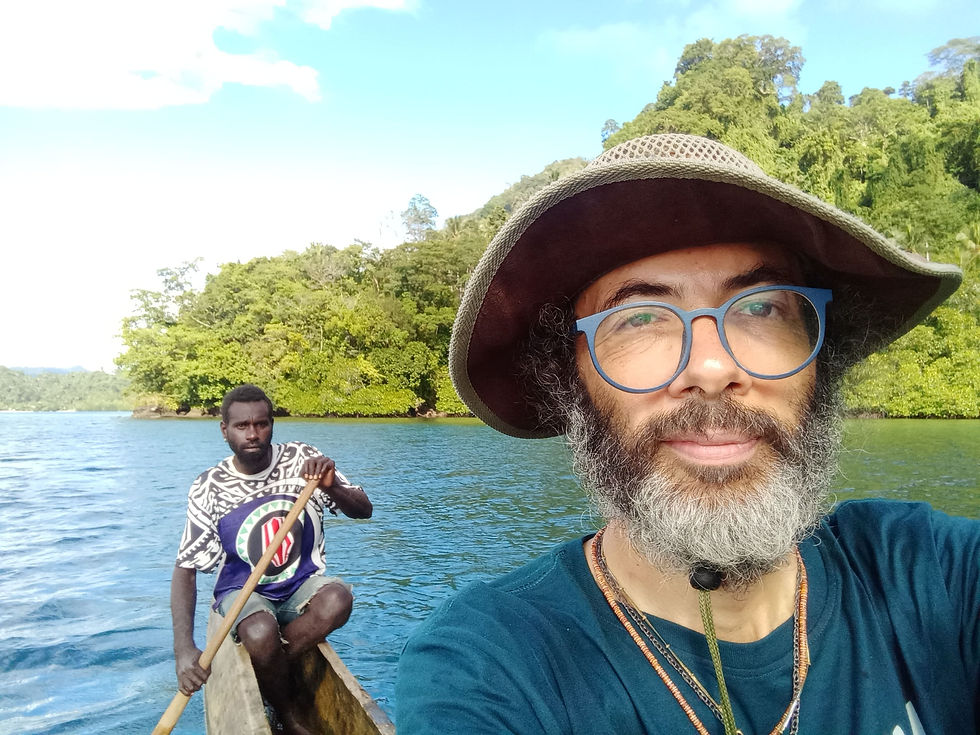
Dr. Gianluca Grimalda is an experimental social scientist exploring social cohesion, globalisation, and climate change, particularly the willingness to help others at personal cost. He aids policy development for the International Panel on Social Progress, ThinkTank20, and the Global Tipping Points Report. He has conducted field studies in Bougainville, Papua New Guinea, such as on indigenous horticulturalists' adaptation to sea level rise and drought.


